3 Glen Alpine Way, Bergvliet, Cape Town
Mon-Fri 08:00 AM - 05:00 PM
The right surveillance camera system is built around your property’s layout and risk level before a single camera is selected. A system designed that way, with the correct cameras in the right positions and integrated with the recording, alert, and response setup around it, will outperform a more expensive system that was specified without a proper site assessment.
According to Statistics South Africa’s 2024/25 Governance, Public Safety and Justice Survey, an estimated 1.5 million housebreaking incidents occurred in South Africa during that period, representing 5.7% of all households nationwide. Surveillance cameras are one of the most effective deterrents and evidence tools available, but only when they are planned and installed correctly.
At JVN Security Systems, we regularly assess properties where cameras are poorly positioned, incorrectly configured, or covering the same ground twice while leaving entry routes unmonitored. This guide explains how to choose the right surveillance camera system, what features matter in practice, and what a professionally planned installation involves from assessment through to handover.
A surveillance camera system records continuous or triggered footage of a defined area and stores it for review, remote monitoring, or use as evidence. The difference between a surveillance system and simple video recording is integration: cameras connected to a recorder, a network, an alarm, and a monitoring platform so that footage is retrievable when it is needed and alerts go out when something happens.
Residential surveillance cameras are most commonly used to monitor entry points, driveways, gardens, and outbuildings. The primary goals are deterrence and evidence capture. A camera visible at the front entrance changes the risk profile of the property for anyone assessing it as a target.
Commercial surveillance systems serve a wider range of functions: deterrence, access management, staff safety, stock loss prevention, and incident investigation. Camera count, specification, and storage requirements are all higher, and integration with access control, gate automation, and alarms becomes more important as site complexity increases.
In both cases, the system is only as effective as the planning behind it. Cameras that record everything but capture nothing useful are a predictable outcome when surveillance systems are bought rather than designed.
Different environments produce different requirements. A camera specification that suits one property will not suit another.
Homes: Typically need cameras with good night vision, wide dynamic range for high-contrast Cape Town conditions, and remote viewing for mobile access. Camera count for most residential properties starts at four and scales with boundary size and access point count.
Offices: Require coverage of entrances, reception areas, car parks, and server or asset rooms. Cameras in staff areas also carry legal and privacy obligations under South African law, covered in a later section of this guide.
Warehouses and industrial facilities: Cameras are needed for wide-angle coverage of large internal spaces, high-resolution cameras for stock identification, and perimeter coverage that works alongside electric fencing and access control. Storage capacity and camera uptime during power outages are critical planning considerations.
Retail stores: Necessary for facial-quality capture at entrances, coverage of transaction points and cash handling areas, and cameras positioned to eliminate blind spots in storage areas. Footage quality and retrieval speed matter more here than in most other environments.
Schools: Require careful camera positioning that covers entrances, playgrounds, car parks, and administrative areas while remaining compliant with privacy obligations around spaces used by minors.
The layout, the volume of movement, the operating hours, and the specific risks of a site are all inputs into a camera selection decision. Getting those inputs right requires a site assessment, not a product comparison alone.
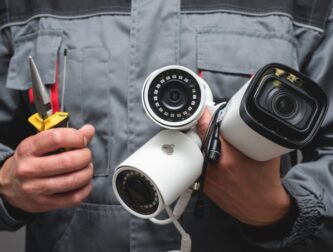
Dome cameras are the most common indoor and covered outdoor camera type. The housing resists tampering and conceals the direction the lens is pointing, making deliberate avoidance more difficult. They suit reception areas, retail floors, car park overhangs, and covered entrance positions.
Bullet cameras are the standard choice for external perimeter coverage. The extended housing allows for a longer lens and better IR range than most dome cameras, making them well suited to driveways, boundary sections, and external positions requiring distance capture. Their visible profile also contributes to deterrence.
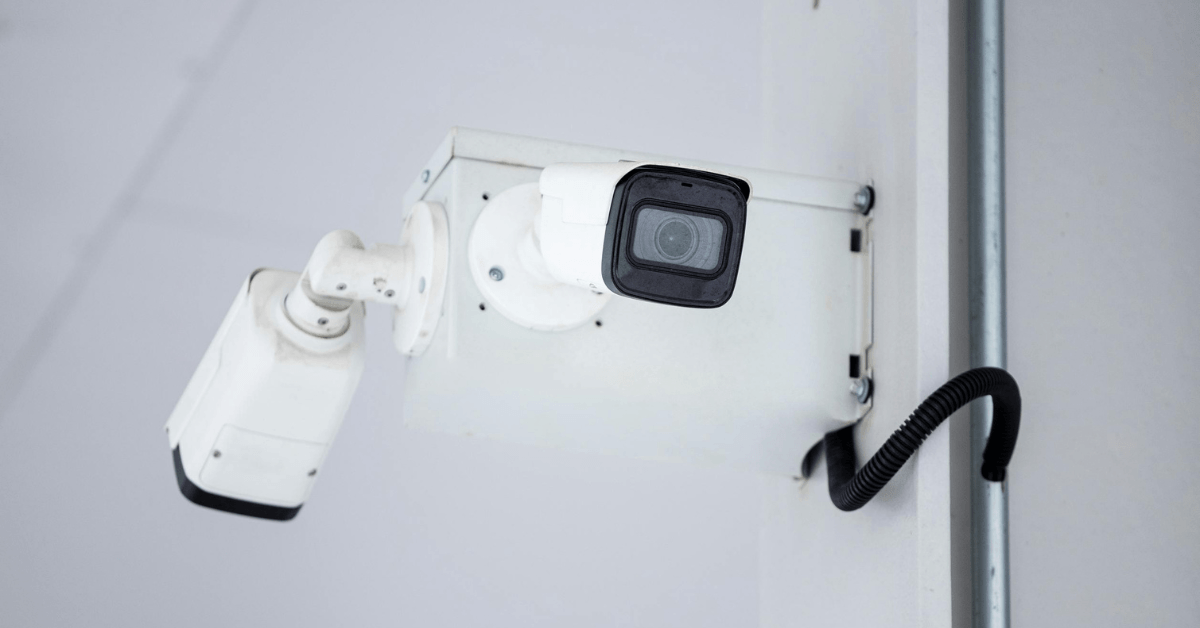
PTZ cameras (pan, tilt, zoom) cover large open areas and can be controlled manually or set to follow motion automatically. They work well on large commercial sites, open car parks, and perimeters where a single camera needs to monitor a wide zone. Effective use requires active monitoring rather than simple recording.
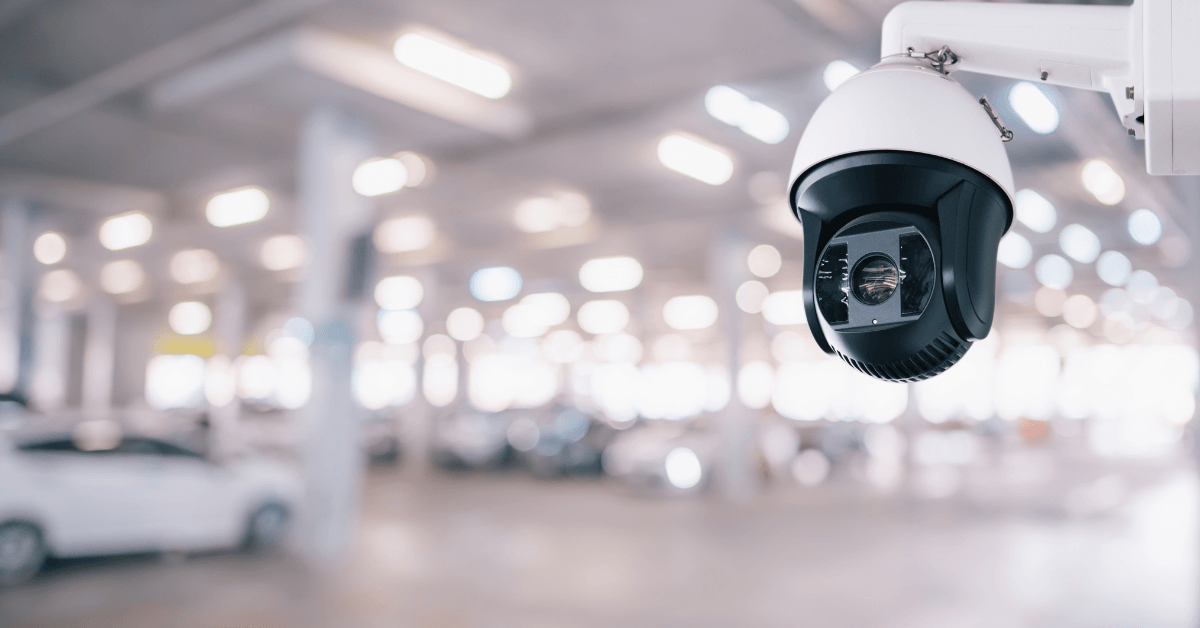
Thermal cameras detect heat rather than light and produce usable detection in complete darkness, smoke, and low-visibility conditions. They are most commonly used on high-security commercial perimeters and critical infrastructure. Because thermal cameras are not suitable for facial identification, they are typically paired with a standard camera covering the same position.
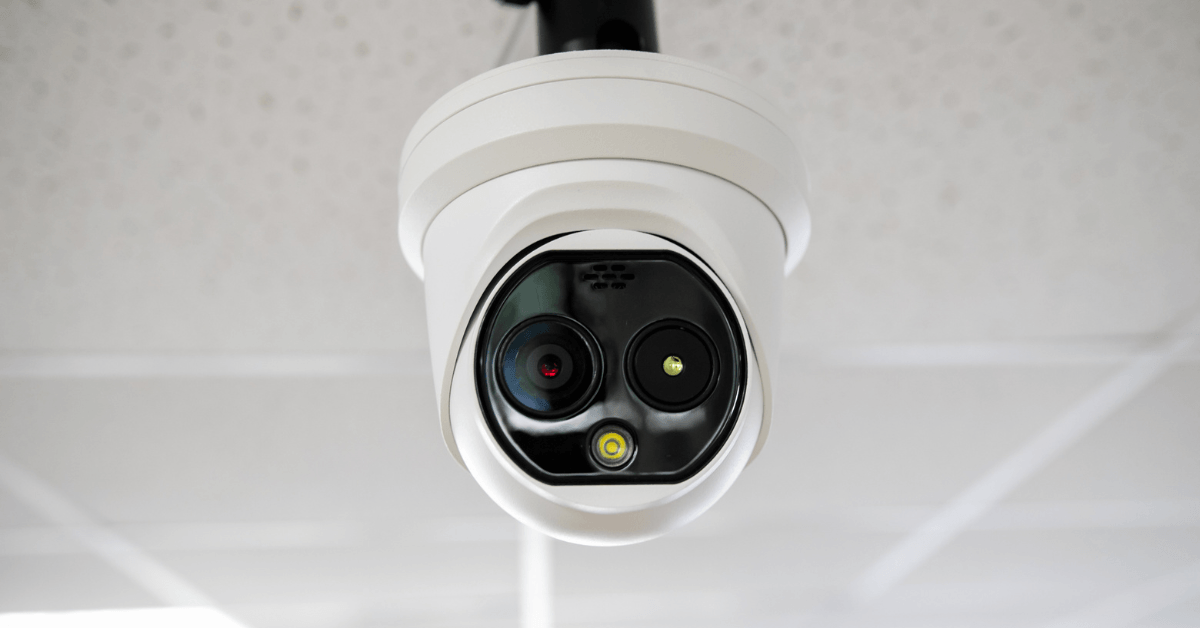
Turret cameras use a ball-and-socket mount that allows the lens to be repositioned after installation without changing the housing. They work in both indoor and outdoor positions and are practical where the final camera angle may need fine adjustment during commissioning.
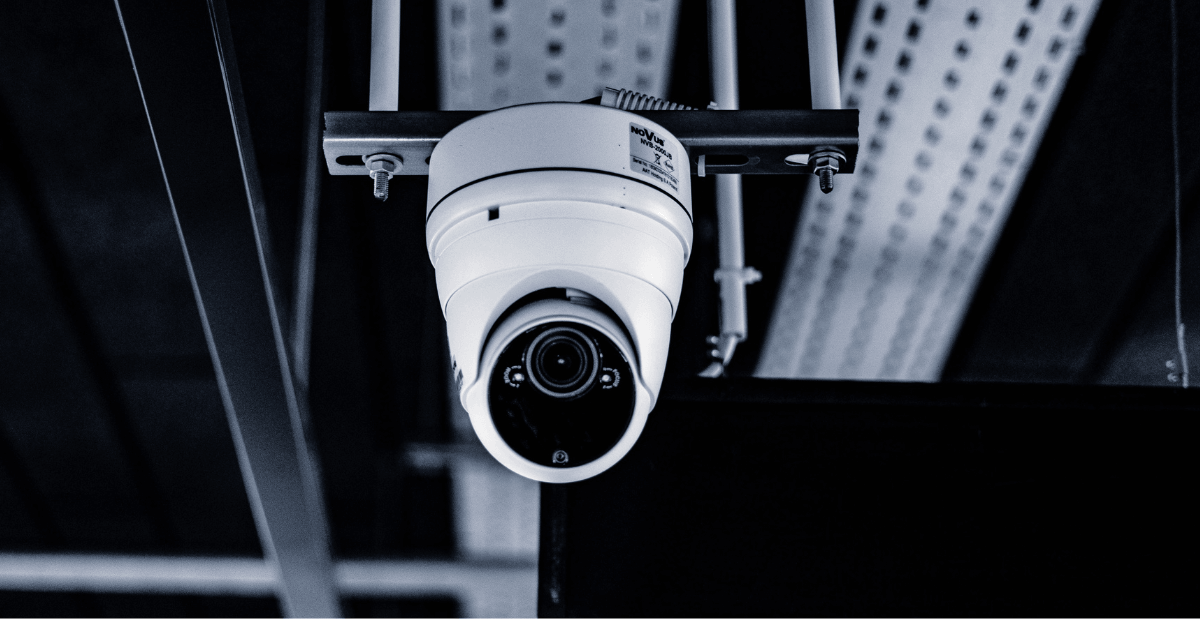
Motion detection triggers recording or alerts only when movement is detected, reducing storage requirements and making footage review faster. On outdoor cameras, sensitivity needs to be calibrated carefully to avoid constant triggers from vegetation, animals, or passing vehicles.
The IR range stated on a camera’s specification needs to match the actual depth of the coverage zone it is serving. A camera with 20 metres of IR range covering a 40-metre driveway leaves the far end of that zone in effective darkness. Match the IR range to the coverage distance before specifying.
Remote viewing allows the property owner or a monitoring centre to access live or recorded footage from any location. This should be configured and tested during commissioning as part of the handover, not left as something to sort out later.
Above 4MP, the gains in image quality for facial identification and number plate capture need to be weighed against the additional storage the files require. Higher resolution cameras produce larger files, which either shortens the retention period or requires more storage capacity.
AI detection can distinguish between human movement, vehicle movement, and other motion triggers. It reduces false alerts on outdoor cameras significantly and allows monitoring platforms to prioritise responses to alerts that warrant them.
Wide dynamic range handles high-contrast scenes where part of the frame is in direct sunlight, and part is in shade. On Cape Town driveways and west-facing entrances, this is a practical requirement, not a premium feature.
Licence Plate Recognition (LPR) requires a dedicated camera angle positioned along the vehicle’s line of travel at the correct height. A general wide-angle entrance camera will rarely produce usable plate images regardless of resolution. If plate capture is a requirement, plan it as a specific camera position.
Local storage via an NVR or DVR keeps footage on-site. Cloud storage keeps it off-site and accessible remotely but requires a reliable connection and a recurring cost. Most professional installations use local storage as the primary system with remote access configured alongside it.
A surveillance system without a UPS (uninterruptible power supply) goes offline during every load shedding interval. On Cape Town properties, that means multiple coverage gaps per week during active schedules. Backup power for cameras and the recorder is a standard requirement, not an optional extra.
The most common failure in a surveillance camera installation is not the specification. It is where the cameras were placed.
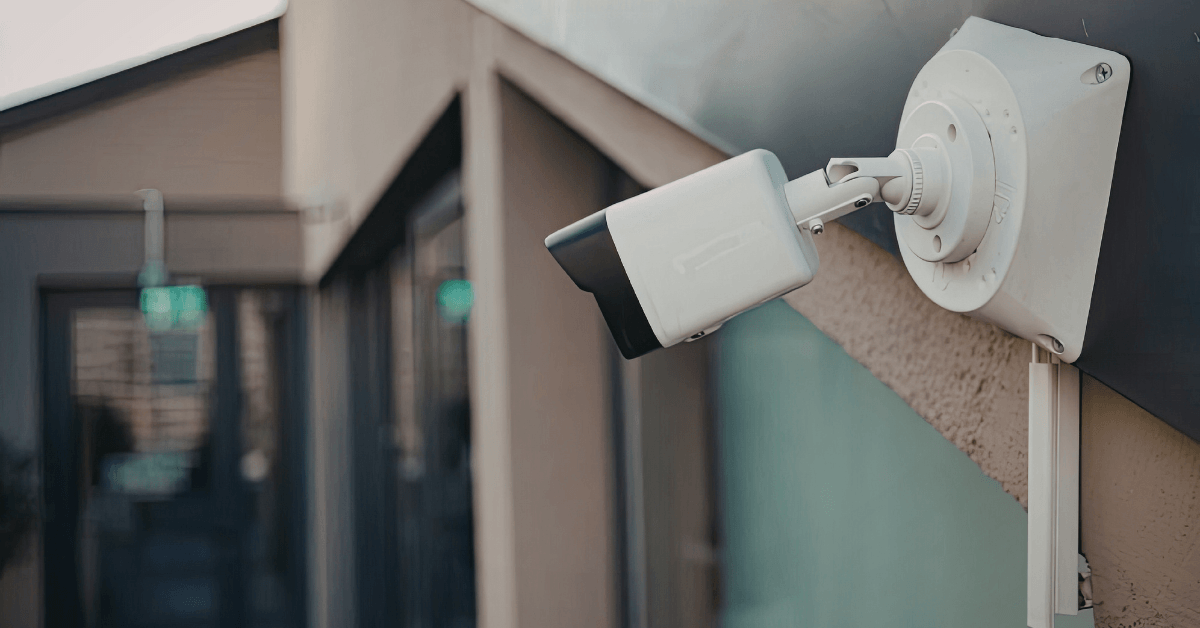
Blind spots: A blind spot is any area of the property not covered by any camera in the system. Finding them requires walking the site, not reviewing a floor plan at a desk. At JVN Security Systems, we map every access route on the ground before confirming positions.
Camera height: For facial identification, the camera needs to be positioned at a height that puts the lens close to face level at the key capture point, typically 2.5 to 3 metres for entrance cameras. Too high and the camera records the top of a person’s head. Too low and it sits within reach for physical interference.
Lighting conditions: A camera pointed into a light source will wash out the foreground regardless of its specification. Cameras covering west-facing positions in Cape Town are particularly exposed to afternoon sun. Confirming lighting conditions at different times of day is part of a proper site assessment.
Entry and exit points: Every realistic access route needs coverage, not just the main entrance. Side gates, garage entrances, rear access points, and service entries are consistently under-covered in residential and commercial installations across Cape Town.
Facial identification distances: A camera covering a wide field of view captures less facial detail at any given distance than a camera with a narrower angle focused on the same position. Coverage area and identification quality are a trade-off that needs to be resolved during the design stage, not adjusted after installation.
Licence plate capture: This requires a dedicated camera angle along the vehicle’s line of travel. A general entrance camera will rarely produce usable plate images. If number plate capture is a requirement, plan it as a specific position in the layout.
A professionally planned camera layout will consistently outperform a more expensively specified system installed without site-specific positioning. This is where the practical value of professional installation sits.
Surveillance cameras are most effective when they’re part of a layered security system rather than your only line of defence. Cameras help you see and record what happens, but other security measures detect, delay and control intruders before they reach your home or business. Together, they create a more effective security strategy.
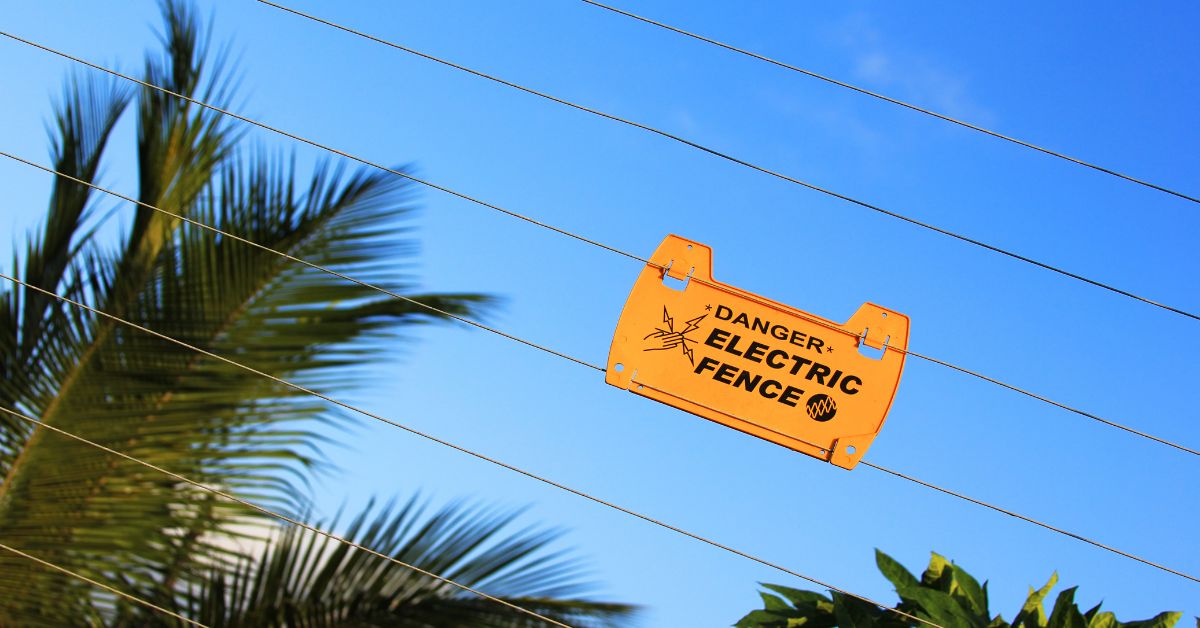
Electric fencing: Detects and deters intruders at the perimeter, providing an early warning before anyone reaches the building. Cameras can then verify what triggered the alert and capture clear footage of the incident.
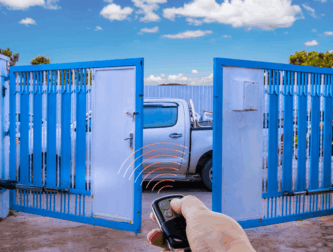
Gate automation and access control: Restrict who can enter your property and direct visitors through controlled entry points. This allows cameras to capture clearer facial and vehicle identification while reducing opportunities for unauthorised access.
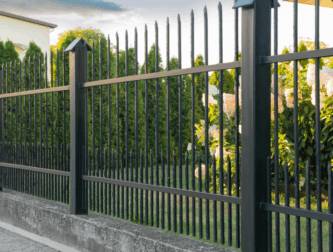
Security fencing: Creates a defined perimeter and limits the number of potential entry points. This makes it easier to position cameras effectively, reducing blind spots and focusing coverage where it’s needed most.
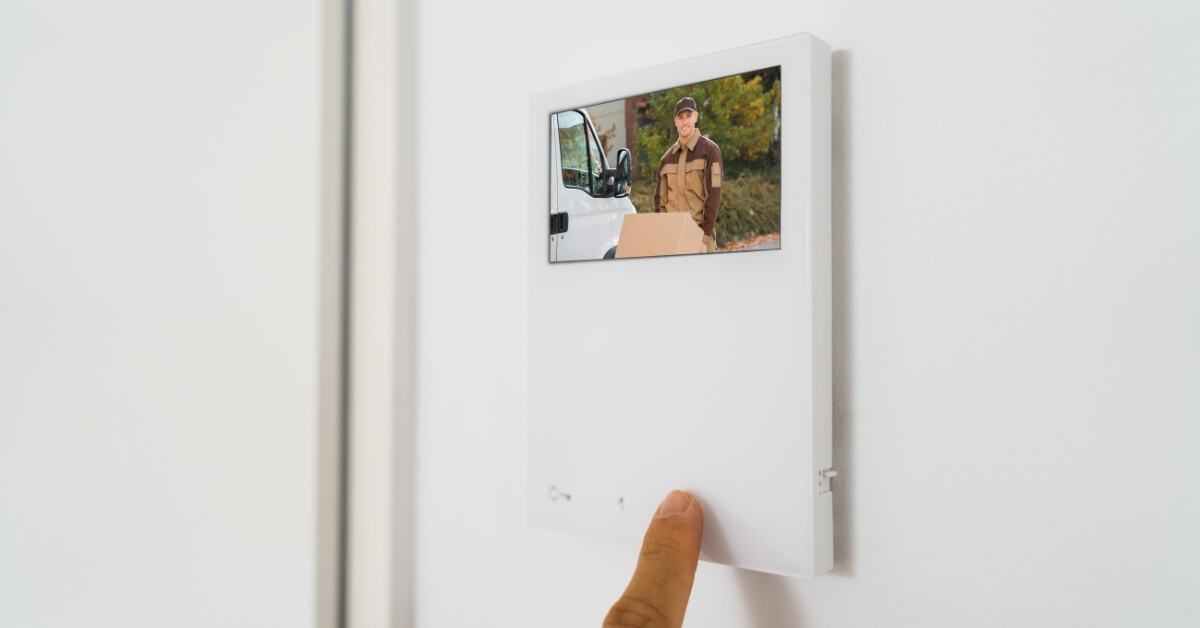
Alarms and intercoms: Cameras show you what’s happening, while alarms notify you immediately when a security breach occurs. Intercoms allow you to verify visitors and communicate before granting access, adding another layer of control.
Security lighting: Good lighting improves image quality and helps cameras capture more useful footage at night. Motion-activated lighting also acts as a deterrent by exposing movement around the property.
Remote monitoring: Brings the entire system together. When an alarm or camera detects suspicious activity, trained operators can assess the footage, verify the threat and coordinate an appropriate response if required.
Yes. In most cases, it is legal to install surveillance cameras in a South African workplace, provided they are used lawfully and for a legitimate purpose.
In South Africa, workplace surveillance is governed in part by the Protection of Personal Information Act 4 of 2013 (POPIA), which regulates how personal information, including CCTV footage, is collected, stored and used. POPIA does not prohibit workplace surveillance, but it does require organisations to process personal information lawfully, transparently and for a legitimate purpose.
In practice, this means:
Inform employees: Employees should be made aware that surveillance cameras are in use. This is typically done through workplace policies, employment contracts and clearly visible CCTV signage.
Use cameras for a legitimate purpose: Surveillance should support a genuine business or security need, such as protecting staff, preventing theft or vandalism, safeguarding company assets, or monitoring access to the premises.
Respect privacy: Cameras should not be installed in areas where people have a reasonable expectation of privacy, including bathrooms, changing rooms and medical rooms.
Handle footage responsibly: Access to recorded footage should be limited to authorised personnel, retained only for as long as necessary, and shared only where there is a lawful basis to do so.
A professional installer should identify any potential compliance issues during the site assessment and recommend camera locations that support both your security objectives and your privacy obligations.
This information is provided as general guidance and does not constitute legal advice. If you need advice about your specific obligations under POPIA or employment law, consult a qualified legal professional.
These are the problems JVN Security Systems encounters most often when called in to assess or replace an existing installation.
Choosing on price alone: A well-placed camera at a lower specification will almost always outperform an expensive camera in the wrong position. Specification without placement planning produces a system that looks complete and underperforms in practice.
Buying more resolution instead of better placement: Beyond a certain point, resolution adds storage requirements without meaningfully improving the footage that matters. Placement decisions have more impact on image quality than specification upgrades.
Installing too few cameras: A four-camera system on a property that needs eight leaves half the boundary unmonitored. The camera count should follow the number of access routes and risk points, not a standard package.
Ignoring storage requirements: The recorder must match the camera count, the resolution, and the required retention period. A system that overwrites footage after three days on a property that needs thirty is not fit for purpose.
Forgetting backup power: A surveillance system that goes offline during every load shedding interval is a predictable and avoidable gap. UPS backup is standard on Cape Town properties.
Choosing the wrong camera type for the position: A dome camera covering a long driveway will not deliver the same image quality at distance as a bullet camera with the appropriate lens and IR range.
Poor cable planning: Cables run without conduit or terminated without proper weatherproofing degrade over time and fail at connection points. Professional cable routing is part of a professional installation.
No maintenance strategy: Lenses accumulate dirt. Storage fills. Firmware becomes outdated. A system without a maintenance schedule degrades quietly until something fails when it matters.
Not allowing for future expansion: A recorder installed at full capacity requires replacement rather than extension when a new camera is needed. Planning scalability into the system from the start adds minimal upfront cost and avoids a full replacement later.
Wireless plug-and-play cameras can be self-installed and provide a basic level of coverage for straightforward positions. The limitations show up when the property requires hardwired cameras, specific coverage zones, or integration with an alarm, access control, or monitoring system.
A professional installation covers the full scope of what makes a surveillance system effective: site assessment, camera positioning, cable routing through conduit, storage and network planning, system configuration, testing, and integration with the wider security setup. It also produces a system that is compliant with relevant South African standards and carries a warranty covering both equipment and installation labour.
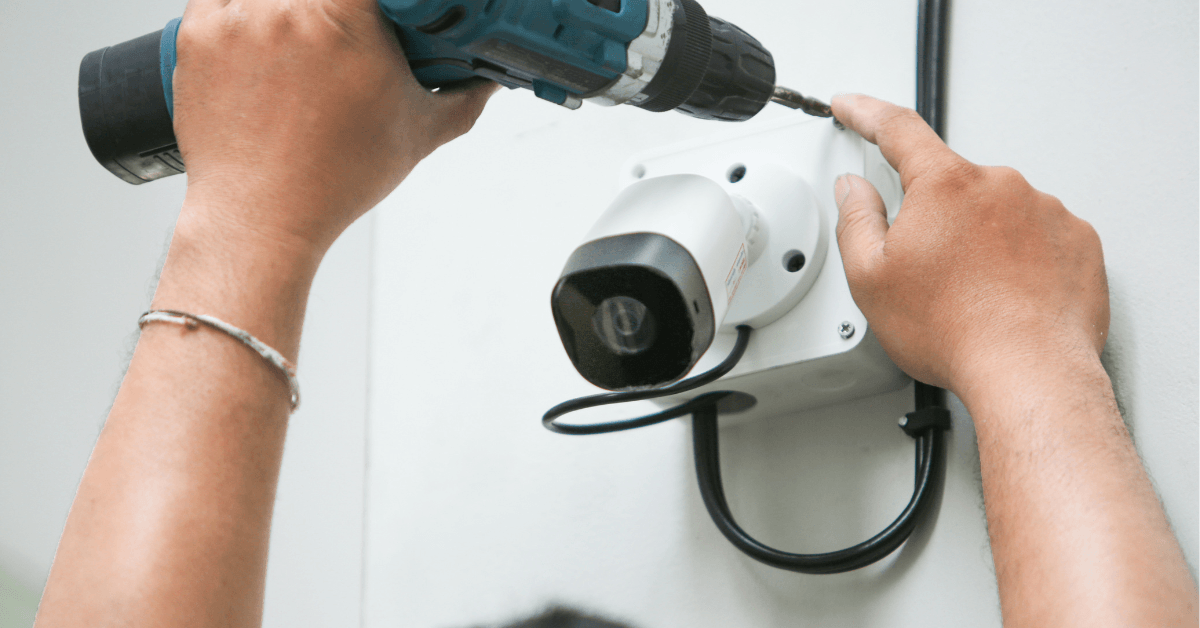
The factors that influence surveillance camera installation cost include camera count and specification, cable run length and routing complexity, recorder and storage specification, conduit requirements for external cable runs, backup power provision, and whether the system integrates with existing gate automation, access control, or alarms. A site assessment and itemised written quotation gives you an accurate figure for your property. Any quote provided without a site visit will miss scope and produce variations once the work is underway.
A surveillance system that is installed and never serviced will degrade in ways that are not always visible until footage is needed and found to be unusable.
Clean camera lenses regularly: Outdoor cameras, particularly in Cape Town’s coastal environment, are exposed to salt air, dust and debris that can reduce image quality if left unchecked.
Test recordings periodically: Confirm that cameras are recording correctly, footage is captured at the expected resolution, and recordings are being retained for the required period.
Keep firmware up to date: Install firmware updates for cameras and recorders when they become available. Updates often address security vulnerabilities, improve system stability and add new features.
Inspect power supplies and backup batteries: Check that power supplies are operating correctly and that UPS batteries still provide adequate backup runtime. Replace ageing batteries before they fail.
Review storage capacity: Ensure your recorder has enough storage to retain footage for your required retention period and is not overwriting recordings sooner than expected.
Check camera coverage: Review camera positioning at least once a year to ensure vegetation growth, new buildings or property alterations have not created blind spots.
Before committing to any company, verify they can demonstrate the following.
Relevant local experience. Has the installer designed and installed surveillance systems on properties similar to yours in size, use, and risk level? Ask for examples. A confident installer provides references without hesitation.
PSIRA registration: Security service providers in South Africa, including companies installing surveillance camera systems with access control integration, are required to be registered with PSIRA under the Private Security Industry Regulation Act 56 of 2001. Verify registration before any work begins.
Site assessment before quoting: Camera count, specification, and cable run cannot be accurately determined without visiting the property. A quote given without a site visit will be either wrong or incomplete.
System design capability: An installer who specifies cameras without addressing storage, cable routing, backup power, and integration with existing security systems is selling hardware, not designing a system. Ask how they approach placement planning and what the site assessment involves.
Quality equipment: Ask what brands are being specified and why. Unbranded or end-of-life equipment installed at a lower price point costs more in replacement and servicing over the system’s lifetime.
Integration capability: Can the installer connect your surveillance system to existing or planned gate automation, electric fencing, access control, and alarms? A company that cannot speak to these systems will produce a surveillance setup that sits alongside your security rather than working with it.
Warranty and aftercare: Confirm the warranty on equipment and installation labour. Ask what the process is for faults within the warranty period.
For a more detailed breakdown of what to look for when hiring, our security camera installer guide covers the key questions to ask before any work begins.
The best surveillance camera system is not the one with the most cameras or the highest-resolution hardware. It is the one designed around the specific risks and layout of the property, installed correctly, integrated with the wider security setup, and maintained on a regular schedule.
A site assessment is the only reliable starting point. It determines the camera count, the placement, the specification, the storage requirement, and how the system fits into everything else protecting the property. Investing in equipment without that step produces a system that may look complete on paper while leaving meaningful gaps in practice.
If you are considering a surveillance camera installation for your Cape Town property and want a system planned and installed correctly, contact JVN Security Systems for a free site assessment before investing in any equipment.
The right residential surveillance camera depends on the position it needs to cover. Bullet cameras with adequate IR range are the most common choice for driveway and external perimeter coverage. Dome or turret cameras are typically more appropriate for indoor and covered outdoor positions. Wide dynamic range matters more than raw resolution for most Cape Town residential installations. A site assessment will confirm which camera types suit which positions on your specific property.
Commercial requirements vary significantly by site. Retail environments need high-resolution cameras at entrances and transaction points. Warehouses need wide-angle coverage of large internal areas and perimeter cameras with strong IR range. Offices require coverage of entry points and secure areas alongside compliance with workplace privacy obligations under POPIA. The right answer starts with a site assessment, not a product selection.
CCTV (closed-circuit television) refers to traditional analogue systems that transmit footage to a fixed set of monitors or recorders. The term is widely used to describe any security camera system, but most modern installations are IP-based, transmitting digital footage over a network to an NVR. A professional installer will advise on whether an analogue or IP system suits your property and budget.
The number of cameras your property needs is determined by the number of access points and risk zones requiring coverage, not by a standard package. Most Cape Town residential properties need a minimum of four cameras. Larger properties, commercial sites, and any property with multiple boundary access points will need more. A site assessment gives you an accurate count based on your specific layout.
Only if a UPS (uninterruptible power supply) is included in the installation. Without backup power, cameras and the recorder go offline during every power outage. In Cape Town, that means multiple coverage gaps per week during active load shedding schedules. UPS backup should be a standard part of any surveillance camera installation, not an optional add-on.
The main factors are camera count and specification, cable run length and routing complexity, recorder and storage specification, conduit requirements for external cable runs, backup power provision, and whether the system needs to integrate with existing gate automation, access control, or alarms. An itemised written quotation following a site visit gives you an accurate figure for your specific property.
Annual servicing covers lens cleaning, firmware updates, storage checks, power supply and UPS battery testing, and a coverage review for new blind spots. Outdoor cameras in Cape Town’s coastal environment may benefit from more frequent housing and lens checks due to salt air accumulation. Your installer should provide a maintenance schedule at handover.
JVN Security Systems is a PSIRA-registered security installation company based in Cape Town with over a decade of experience designing and installing surveillance camera systems for residential and commercial clients across the Western Cape.
We conduct a full site assessment for every installation, confirm every camera position on the ground before any cabling begins, and commission, test, and hand over each system with remote viewing configured and a clear post-installation support contact in place. When you contact JVN Security Systems, you speak to someone who knows the work, knows the area, and will give you a straight answer about what your property actually needs. No padding, no shortcuts.
If you are looking for surveillance camera installations in Cape Town, contact us on 084 241 4549 for a free site assessment and written quotation.
When most Cape Town homeowners think about property security, they thi
The site’s risk level determines the right security fencing for
Gate motor installation is one of the most practical security upgrades

A garage door motor that is not properly matched to the door will let