3 Glen Alpine Way, Bergvliet, Cape Town
Mon-Fri 08:00 AM - 05:00 PM
The most effective security camera installations position cameras at every realistic access route on your property: the main entrance, the front approach, any secondary entry points, and the rear. Cameras placed without a site plan behind them miss the routes intruders actually use, produce footage that is too wide or too dark to be useful, or leave sections of the property completely unmonitored.
According to Statistics South Africa’s 2024/25 Governance, Public Safety and Justice Survey, an estimated 1.5 million housebreaking incidents occurred across South Africa during that period, representing 5.7% of all households. A properly positioned home security camera system will not prevent every incident, but it changes the risk profile of your property for anyone assessing it as a target and creates usable evidence when something does happen.
At JVN Security Systems, placement planning is where every security camera installation begins. We are regularly asked to review or replace existing CCTV systems where cameras were installed without a site plan: poorly angled, pointed into light sources, missing the rear of the property entirely, or covering the same ground twice. This guide explains where cameras should go, what height and angle produce the most useful footage, and what a professional installation of security cameras involves from assessment through to handover.
More cameras do not automatically mean better coverage. A home surveillance camera system with six cameras covering overlapping sections of a front garden provides far less security value than four cameras placed at the front entrance, rear access point, driveway approach, and secondary entry, each positioned and angled for its specific zone.
The goal of any security camera and installation plan is to capture usable footage of every realistic access route, at a resolution and angle that identifies a person, not just confirms that someone was present. A camera angled too broadly, mounted too high, or pointing into a light source will record but produce footage that is practically useless when you need it.
This is why a site assessment before any cabling begins is not optional. Placement is mapped, access routes are confirmed on the ground, and camera positions are agreed before any work starts. That step is what separates a system that protects your property from one that is simply present on your walls.
Entry points are the foundation of any placement plan. These are the positions that matter most across Cape Town residential and commercial properties.
For most security camera installation configurations, a mounting height between 2.5 and 3 metres gives the best balance between facial capture and coverage area. Below 2 metres, cameras sit within reach for physical tampering. Above 3.5 metres, the angle becomes too steep for reliable facial identification unless the camera is specifically specified for overhead wide-angle coverage.
From that height, the field of view should deliver face-level detail at the point 2 to 4 metres from the mounting position. For an entrance camera, that is where the clearest image matters most. The camera should tilt down enough to cover this zone without pointing so steeply that it only records the ground below it.
Night performance is closely tied to camera position. A camera pointed toward a light source, whether a street lamp, a neighbour’s floodlight, or a west-facing wall in afternoon sun, will wash out the foreground. Avoiding direct light sources and confirming adequate IR (infrared) range for night coverage needs to happen during the site assessment, not after the cameras are already mounted.
A blind spot is any area of your property that falls outside the field of view of every camera in your system. Finding them before installation requires walking the site, not reviewing a floor plan or satellite image from a desk.
During a site assessment, we walk every access route on the property, note where coverage drops out, identify where a person could move between areas without being captured, and map where overlapping fields of view from two cameras would close a gap that one camera alone cannot cover. The walkthrough also picks up positions where a camera would be obscured by a gate opening in front of it, a tree growing into the coverage zone, or a wall narrowing the effective angle.
Common blind spots in Cape Town residential properties include the space between a boundary wall and a parked vehicle, the area behind outbuildings or large garden structures, and the section of driveway that falls between two cameras with a gap in their coverage zones. All of these are predictable and can be addressed at the planning stage when the site is properly assessed before installation begins.
Cape Town’s environment places specific demands on outdoor security camera installations that do not apply in the same way inland.
Salt air and high humidity accelerate corrosion on camera housings, mounts, and cable connections. Cameras installed within a few kilometres of the coast should carry a minimum IP66 rating. Properties directly on the Atlantic Seaboard, in Bloubergstrand, or along the False Bay coastline should specify IP67 or higher for direct coastal exposure.
Cape Town’s strong sunlight and long afternoon shadows create high-contrast conditions that challenge cameras not specified for wide dynamic range (WDR). A camera covering a driveway that sits in full sun for part of the day and deep shadow for another needs WDR capability to maintain usable image quality across both conditions.
The effective IR range of a camera should match the depth of the coverage zone it serves. A camera with 20 metres of IR range covering a 40-metre driveway leaves the far half of that driveway in effective darkness at night.
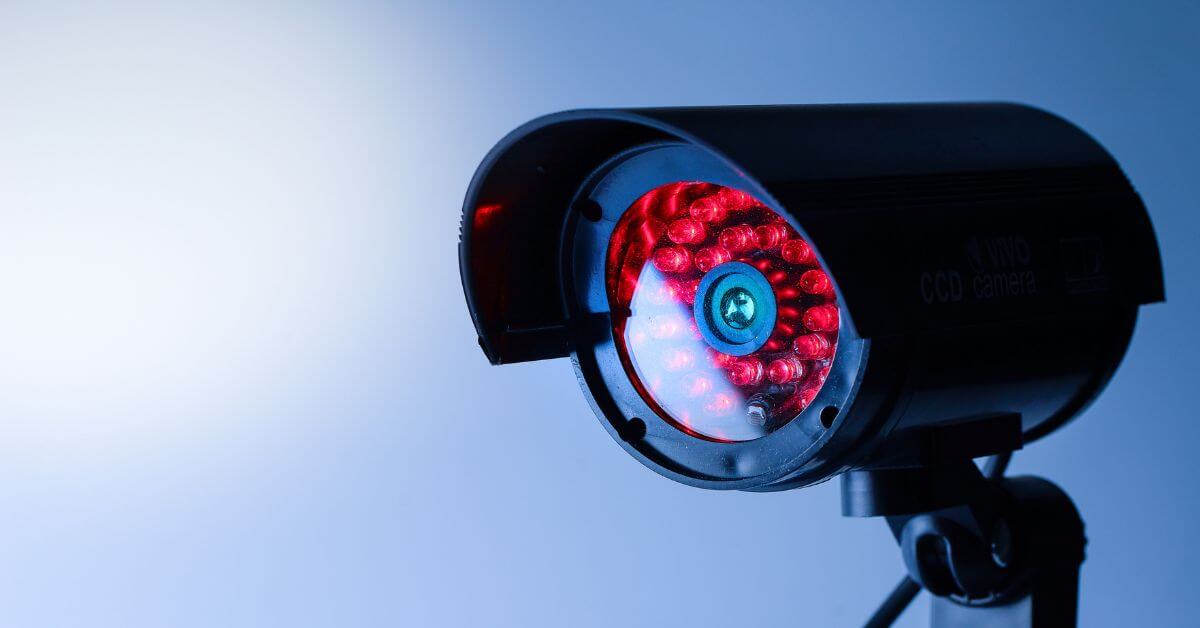
A surveillance camera system without battery backup or a UPS (uninterruptible power supply) goes offline during every power outage. For Cape Town properties, that means multiple interruptions per week during active load shedding schedules. Backup power for the recorder and cameras should be part of any properly planned installation, not an optional add-on.
In South Africa, the Protection of Personal Information Act 4 of 2013 (POPIA) applies to CCTV systems that record individuals. Cameras positioned to capture public pavements or neighbouring properties raise compliance considerations that a professional installer should flag during the site assessment and address through camera angle adjustment before installation is finalised.
The cost of security camera installations varies based on camera count, specification, cable run length, conduit requirements, and recorder setup. Based on current Cape Town market conditions from JVN Security Systems’ own active installations:

All figures are approximate and based on current Cape Town installation data. An accurate cost for your property requires a site visit and an itemised written quotation, both of which JVN Security Systems provides at no charge before any work begins.
Wireless plug-and-play cameras can be self-installed, and for a basic home camera security system covering one or two positions, this is a workable option. The limitations are worth understanding: wireless systems are vulnerable to signal interference and power supply failures, and consumer-grade image quality often falls below what is needed for footage to serve as reliable evidence.
A hardwired CCTV system requires proper cable runs through conduit, correct power supply management, and recorder configuration. The wiring also interacts with mains power in ways that carry compliance implications under SANS 10142, the South African National Standard for the Wiring of Premises. Incorrect installation leads to coverage gaps, poor image quality, and systems that fail exactly when they are needed most. Most camera warranties are also voided by non-professional installation.
For anything beyond a basic wireless setup, professional installation is the right approach. If you are assessing which company to use, our guide to choosing the right security camera installer covers the qualifications to look for and the questions to ask before any work begins.
Professional installation of security cameras covers the full cable path from each camera to the recorder, managed through conduit, and properly terminated at both ends.
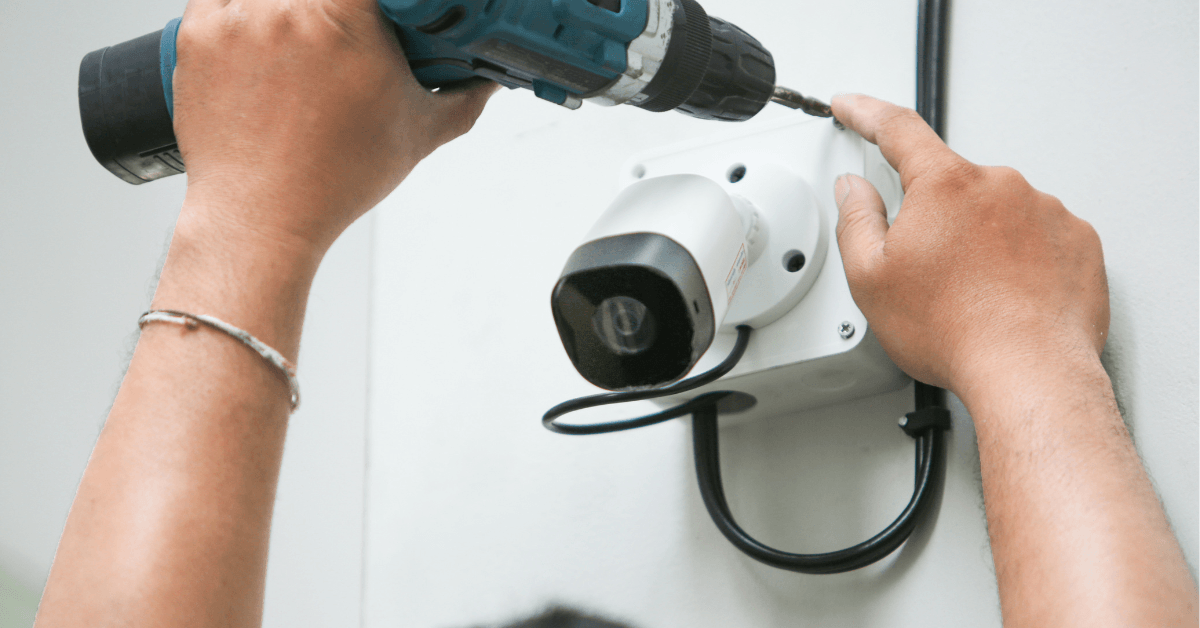

These are the mistakes JVN Security Systems encounters most often when called in to review or replace an existing installation.
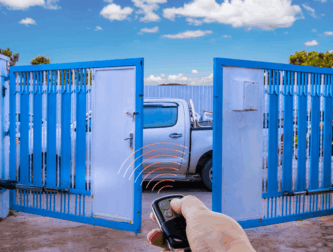
A gate controls who enters your property. A CCTV system records what happens at and around the entry point. The two work together, and installing both at the same time means a single cable run and one team that understands the whole setup from perimeter to recorder.
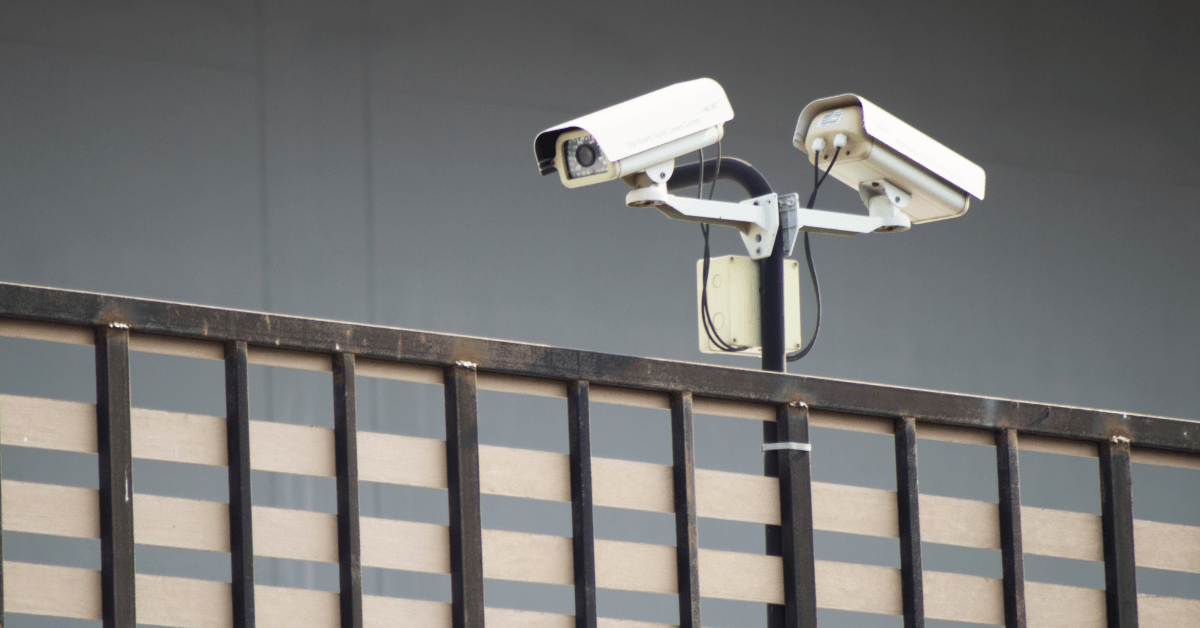
Combining the work reduces disruption, avoids duplicate cable runs, and gives you a full security setup that was planned as a system rather than assembled in pieces. JVN Security Systems handles both security camera installations and automated gate installations across Cape Town for residential and commercial properties. If gate automation is something you are considering, mention it when you request your site assessment and quote for the camera installation.
Most residential properties in Cape Town need a minimum of four cameras for meaningful coverage: the main entrance, driveway or front approach, rear access, and at least one secondary entry point. Larger properties with outbuildings, multiple gates, or internal coverage requirements will need more. A site assessment gives you an accurate number based on your specific layout.
A four-camera residential system with HD cameras, a recorder, cabling through conduit, and UPS backup typically falls between R8,000 and R18,000 installed, based on current Cape Town market conditions. The final figure depends on camera specification, cable run length, site conditions, and whether access control integration is required. JVN Security Systems provides itemised quotations after a free site visit.
Basic wireless cameras can be self-installed for simple coverage needs. A hardwired professional system requires proper cabling, conduit, power management, and recorder configuration, and carries compliance implications under SANS 10142 if done incorrectly. Most camera warranties are voided by non-professional installation. For any system where footage quality and reliability matter, professional installation is strongly recommended.
Verify certifications first, then require a site assessment before any quote is provided. A reliable installer plans camera positions before quoting, provides an itemised written quotation, runs all cabling through conduit, includes UPS backup as standard, and configures remote viewing before they leave.
Traditional CCTV systems use analogue cameras connected by coaxial cable to a digital video recorder (DVR). IP camera systems use network cameras connected by Cat5e or Cat6 cable to a network video recorder (NVR). IP systems generally offer higher resolution and greater flexibility. Analogue systems can be simpler and more cost-effective for smaller installations. A professional installer will advise on which suits your property and budget.
Yes. Coastal salt air and high humidity accelerate corrosion on camera housings and cable connections. Cameras installed within a few kilometres of the coast should carry a minimum IP66 rating. For properties directly on the Atlantic Seaboard, in Bloubergstrand, or along the False Bay coastline, IP67 or higher gives better long-term protection. Your installer should account for these conditions when specifying hardware, not apply a standard inland specification regardless of location.
JVN Security Systems is a security installation company based in Cape Town with over a decade of experience fitting home security camera systems and commercial CCTV systems across the Western Cape.
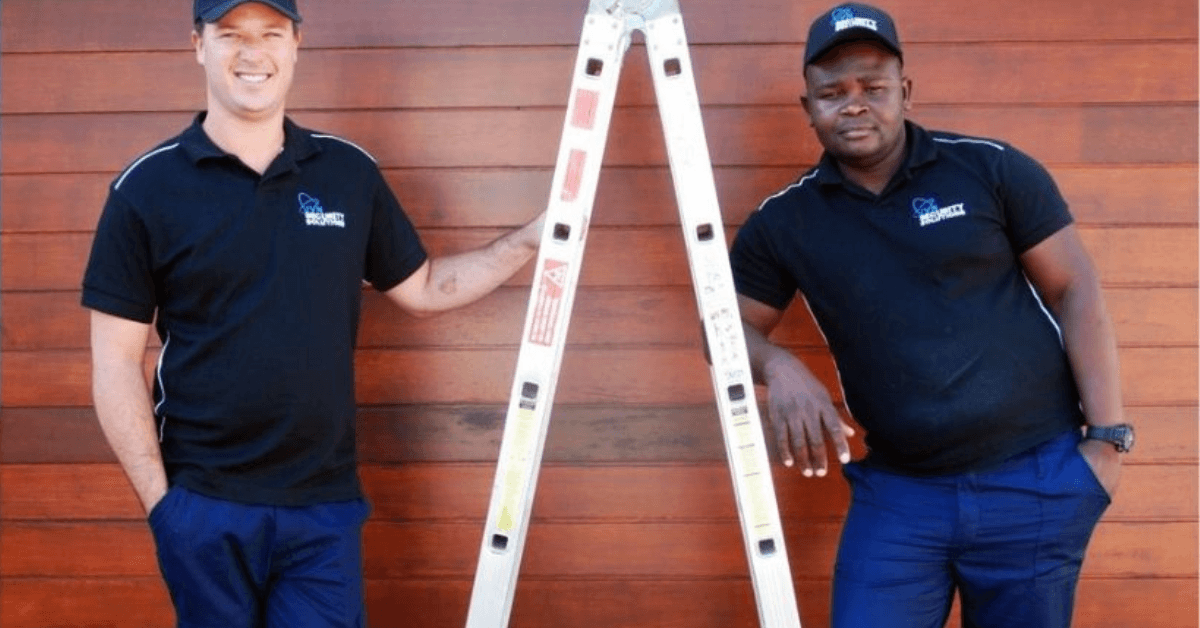
We conduct a full site assessment for every installation, confirm every camera position on-site before any cabling begins, and commission, test, and hand over each system with remote viewing configured and a clear post-installation support contact in place. When you contact JVN Security Systems, you speak to someone who knows the work, knows the area, and will give you a straight answer about what your property actually needs. No padding, no shortcuts.
If you are looking for security camera installations in Cape Town, contact us on 084 241 4549 for a free site assessment and written quotation.
When most Cape Town homeowners think about property security, they thi
The site’s risk level determines the right security fencing for
Gate motor installation is one of the most practical security upgrades

A garage door motor that is not properly matched to the door will let